
Best POS system for small restaurant: the real cost
Two quotations with the same headline figure can differ by a wide margin once every device is counted. The gap is usually hidden in the words per screen and per terminal.
Home / Blog / Point of sale system cost: what a restaurant really pays for
A POS quote usually shows the software and the hardware. The card processing, the setup and the contract fees often come later. Here is the whole bill, and how a flat monthly price with no commission changes it.
Anzul Aqeel · Founder & Director, Anunzio International FZC · 7 October 2026 · updated 16 October 2026
A complete point of sale system costs a first-time restaurant owner five things: the software, the hardware, the card processing, the setup, and the contract fees nobody mentions in the demo. GetMenu charges a flat monthly price with no commission, runs on a tablet you may already own, and lists every plan in your currency on its pricing page.
Every POS system in a restaurant has a bill with five parts, and a quote usually shows only the first two. UpMenu's cost guide puts software at $0 to $300 a month and a standard hardware setup at $700 to $2,000, with payment processing adding 1.5% to 3.5% of every card sale on top.
The five parts are these. Software: the monthly or yearly fee for the app and the dashboard. Hardware: the screen, the printer, the cash drawer and the stand. Card processing: a percentage of every card payment. Setup: menu entry, training and installation, sometimes free and sometimes a line of its own. Contract fees: statements, compliance, early exit and renewal terms, in the small print.
A vendor's quote usually shows the software and the hardware. The card processing, the setup and the contract fees often come later, after you sign. So the point of sale system price on the quote is rarely what you pay. Read a quote by asking where each of the five is. A missing part is a cost, not a saving.
The point of sale software price is set in one of two ways: a monthly subscription, or a free app where the vendor earns from a fee on each card payment. Neither way is wrong. The mistake is comparing a subscription with a card fee and missing the total.
Square's own pricing page shows the second way plainly: the restaurant plan starts at no monthly fee, with 2.6% plus 15 cents on each in-person card payment. On $30,000 of card sales a month, 2.6% is $780 before the cents are counted. A flat subscription works the other way: the same price in a quiet month and a busy one.
Small restaurant software should be priced like a utility bill: flat, monthly and known in advance. GetMenu's plans work that way, with no commission on orders from your own ordering page.
Running a POS in a restaurant with one counter needs one tablet, a stand with power, a receipt printer and a cash drawer that plugs into the printer. Everything else is a choice, and your card machine stays where it is.
Some vendors put the hardware on a lease or inside a multi-year contract, and leased hardware contracts are frequently non-cancellable, so you keep paying for it even after you stop using the system. A tablet you buy yourself keeps its value and follows you to the next system. The GetMenu POS runs on iPad and iPhone, and on Android tablets, phones and Sunmi or iMin machines with a printer built in. It prints receipts and kitchen tickets on USB (on the LAN), network, Bluetooth and built-in printers, and the cash drawer opens through the receipt printer. See the full list of supported POS hardware.
The hardware bill grows with every extra screen, so count screens before you count features. A counter tablet, an older tablet as a kitchen screen and a phone for the waiter cover most small rooms. A POS system for small restaurant budgets should also have no limit on how many devices you add, so a second counter does not mean a second contract.
Card processing is the one cost that grows when you sell more. At 1.5% to 3.5% per card payment, a busy month costs more than a quiet one, and it can cost more than the software fee.
GetMenu takes no processing fee because it processes no card payments. Customers who order online pay cash or by card machine when the order arrives. At the counter the cashier keys the amount on your own card machine and records on the POS how the sale was paid. You still pay your bank its own rate, but no POS vendor adds a percentage on top. At shift close the card machine's batch total is typed in and sits beside the POS card total, so the two are compared the same evening.
The hidden costs are the fees that are true but not mentioned: monthly statements, compliance charges, batch fees, and the price of leaving early. A National Restaurant Association study cited by OrderPin found that 67% of restaurant owners were surprised by at least one POS fee, costing an average of $2,400 a year per location.
PaymentCollect's breakdown of what merchants actually pay says early termination fees of $300 to $600 are common, and OrderPin's list of hidden fees adds statement fees of $5 to $15 a month. So ask four questions before signing. What is the exit fee, and is it charged per terminal? Which compliance and statement fees are separate from the quote? What is the renewal term and the notice period? And can I take my sales history and customer list with me?
Ask for the price as a two-year total with every one of those included, and compare totals, not monthly fees. A quote that cannot be turned into a two-year total is hiding one of the five parts.
Anzul Aqeel, the founder of GetMenu, spent four years reselling POS management software to small businesses before he built one. "The quote was never the price. The price was the quote plus the processing plus the contract, and nobody read the last two until the first statement arrived."
Commission is not part of the five, but it is the biggest extra cost for a restaurant that lives on delivery. It is not on any POS quote because it is paid to somebody else. One fee guide puts third-party delivery commission at 15 to 30% per order on DoorDash and Uber Eats.
GetMenu's answer is your own ordering page on your own address, with no commission on anything ordered there. When an order is placed, a ticket goes to the managers' group and a dispatch to the riders' group on WhatsApp, with the building the customer picked at checkout, the unit number, and the map pin when the customer shares one. The customer gets a confirmation from your own number the moment the order is placed and a status page they can open without logging in. The customer pays you directly, so no third party takes a share.
GetMenu is sold as a flat monthly plan, and the POS is a yearly add-on to it. The figures are on the pricing page in your currency. There is no commission on your own orders, no processing fee from us, and no limit on the number of POS devices.
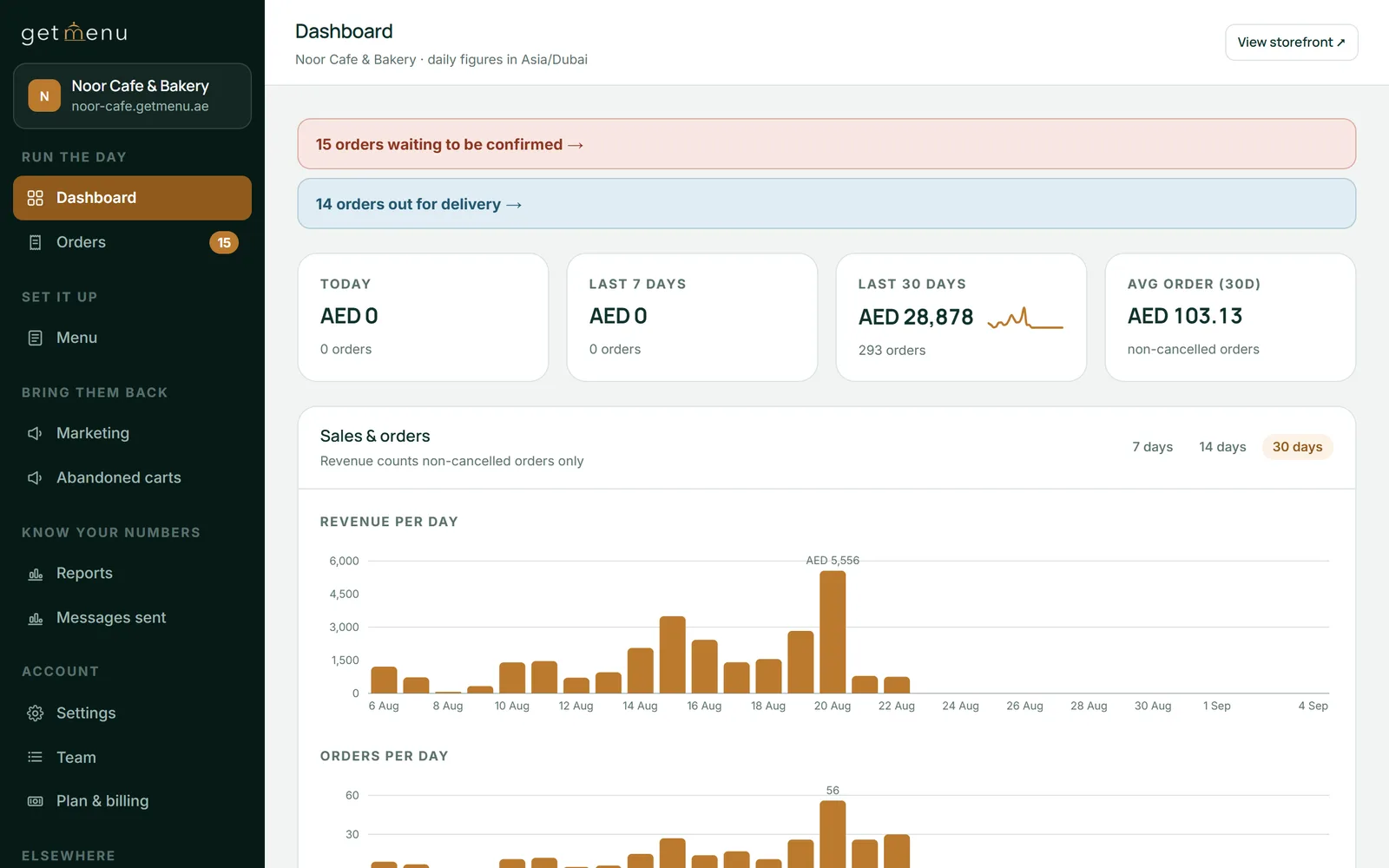
Every plan includes the ordering system itself. Your menu is uploaded from a spreadsheet instead of typed, with options and add-ons at their own prices. Stock counts fall as orders come in and flip a dish to sold out at zero. Invoices can carry your TRN, and the customer can download the PDF without logging in. Several branches are priced together.
Coupons with expiry dates and bundles for a fixed price, such as any three dishes, are on the Growth and Pro plans. The loyalty card in Apple Wallet and Google Wallet, which keeps updating itself, with tiers your regulars grow into, is on Pro.
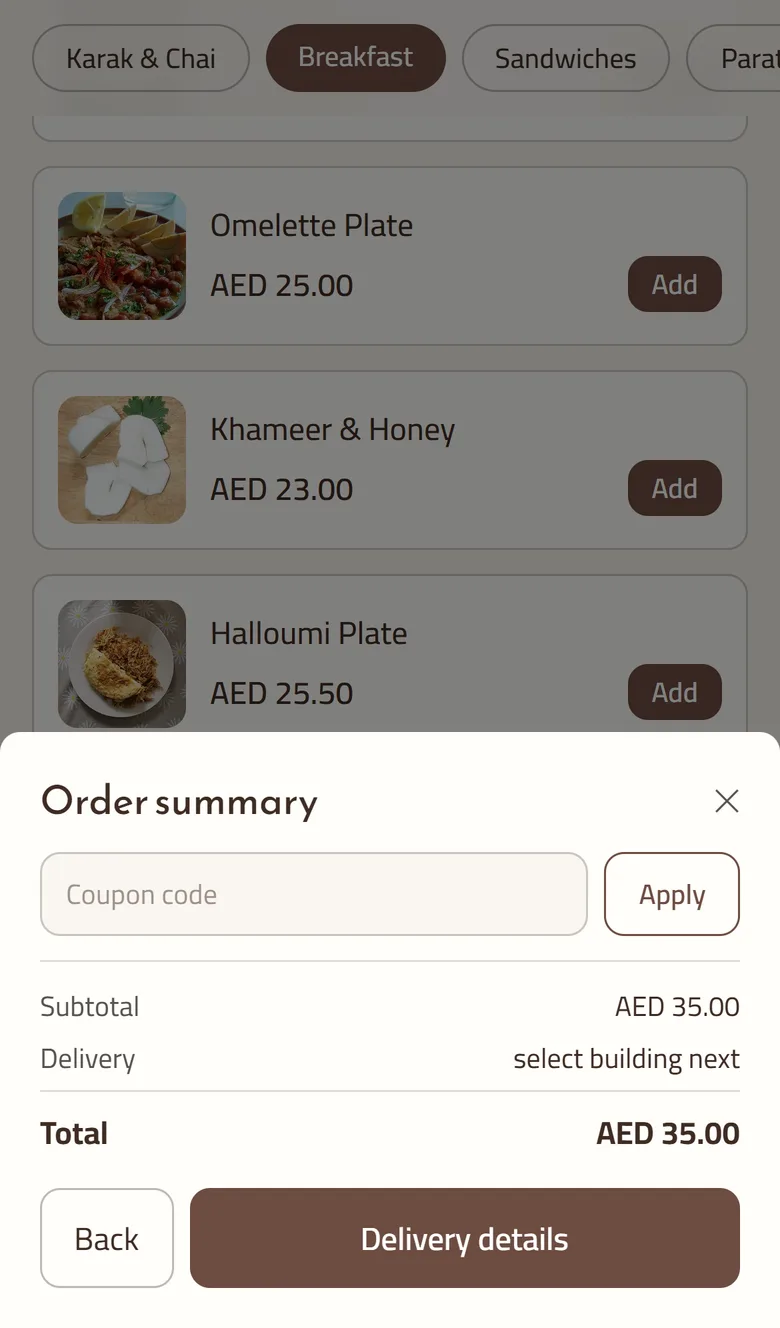
The ordering plan has a 15-day trial with no card needed. The POS add-on has no trial of its own, so check its price on the pricing page first. Our guide to the best POS for a small restaurant compares the options side by side.
Industry guides put software at anywhere from nothing to $300 a month, but the monthly fee is only one of five costs. Add the hardware, the card fees, any setup charge and the contract fees before you compare two quotes. GetMenu's plans are flat monthly prices with no commission.
Rarely, for a small restaurant. A lease spreads the cost of the terminals over the contract, but the total paid is usually higher than buying, and the contract often ties the hardware to one vendor's software and card processing. A tablet you already own, a printer and a drawer cost less to buy outright and work with any POS app that runs on them.
The cheapest POS is the one whose two-year total is lowest with all five costs counted, not the one with the smallest monthly fee. For most small restaurants that means a tablet you already own, a printer and a drawer, software priced flat with no vendor percentage on card sales, and no commission on online orders.
The common ones are monthly statement fees, compliance charges, batch fees for closing the day, and early termination fees of a few hundred dollars per terminal. A National Restaurant Association study cited by OrderPin found 67% of owners met at least one fee they did not expect. Ask for every fee in writing before signing.
Add the hardware once, the software for twelve months, the processing on a year of card sales, any setup charge and the contract fees. Guides put software at up to $300 a month and hardware at $700 to $2,000, with processing at 1.5% to 3.5% of card sales. Processing grows with sales. You always pay your bank for it, but you can avoid a POS vendor adding its own percentage.
Guides put it at 1.5% to 3.5% of each card payment, paid to the bank or the company that runs your card machine. On $30,000 of card sales in a month, 2.6% is $780. Work it out on a normal month's card sales before you compare quotes, because this line grows as you sell more.
All five costs, each as a figure: the software for 24 months, the hardware, the card processing on two years of normal card sales, any setup or training charge, and the contract terms, including the fee to leave early. Ask whether any price rises after the first year.
Two quotations with the same headline figure can differ by a wide margin once every device is counted. The gap is usually hidden in the words per screen and per terminal.
Toast is not sold in most countries. Here is what a restaurant elsewhere should check in any system it can buy: card payments, devices and how orders reach riders.