
Free QR code for restaurant menu: what it fixes and what it does not
Menus in Lebanon go out of date faster than they wear out. A printed code is the cheap half of the answer, and choosing what sits behind it is the half that matters.
Home / Blog / QR code menu: how it works, from printing to repeat orders
A printed code can do far more than show a picture of your menu. Here is how to print one properly, wire it to real ordering, and make it earn its place on the table.
Tanzeel ur Rehman · Co-founder, Get Menu · 2 September 2026 · updated 16 October 2026
A QR code menu is a printed square of card that opens your menu on the guest's own phone. That part is simple. What sits behind the code is where restaurants split into two groups. In the first group the code opens a PDF, which is a photograph of paper the guest has to pinch and drag around a small screen. In the second group the code opens a live page that shows today's prices, takes the order, and tells the kitchen which table it came from.
This guide is about the second kind. What to print, what happens after the scan, and what the same card can still do for you six months later.
The code holds nothing but a web address. It is not a menu and it is not software. Everything the guest sees after the scan comes from the page that address points at. That is why two restaurants can print cards that look identical and get completely different results.
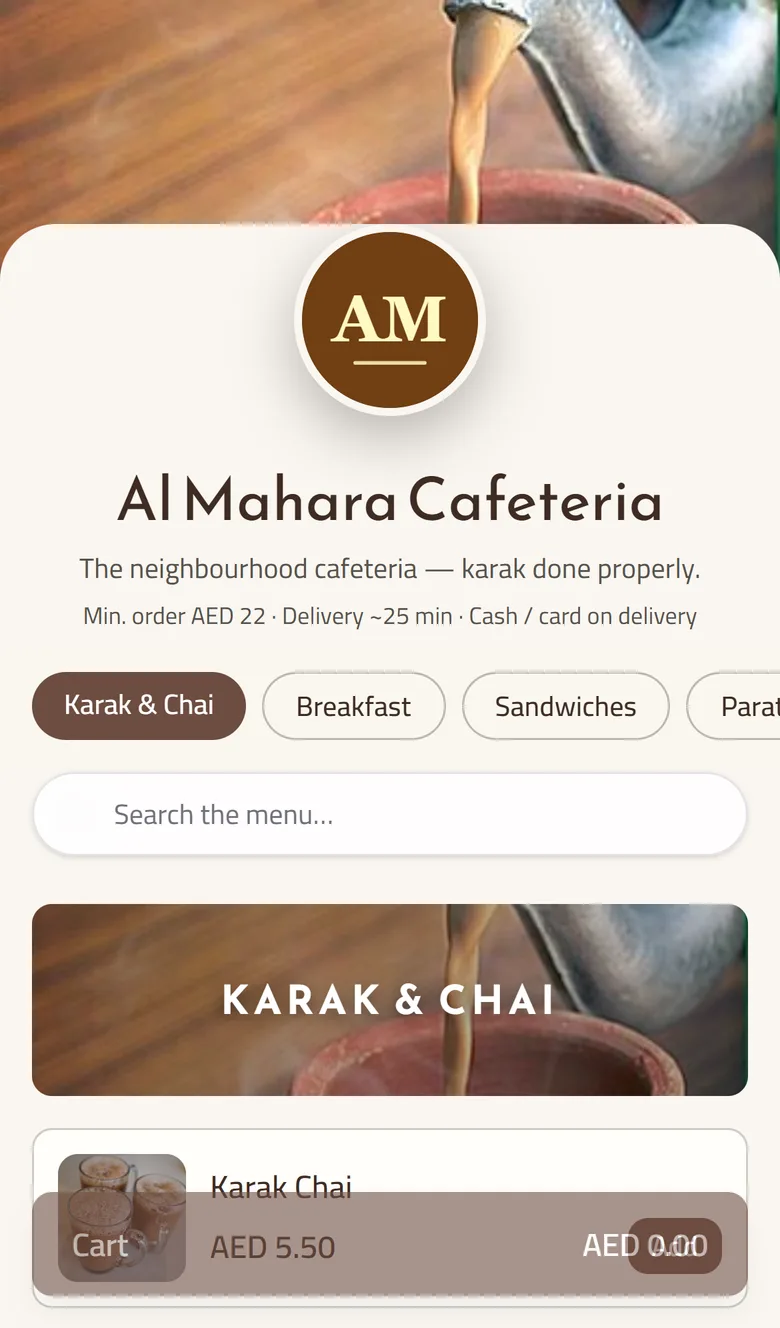
Type "QR code for restaurant menu" into a search bar and you will meet both products under one name. One is a design tool that turns a PDF into a link. The other is an ordering page with your menu inside it. The printing costs the same either way. What changes is what the guest can do once the page opens.
A table code has one hard job: it must scan in dim evening light, from a seated angle, on an older phone. Three things decide whether it does.
Contrast. Dark code on a light card. A pale grey code on a beige card looks tasteful on a screen and fails on the table. Get Menu's card designer refuses to produce a code whose colours do not have enough contrast to scan, and it re-checks that every time the card is drawn, so a card that got past somebody's colour choice cannot reach the printer.
The empty margin. Denso Wave, the company that invented the QR code, specifies a quiet zone four modules wide on all four sides of the symbol. That is the plain border of nothing around the code. Designers fill it with a logo or a frame, and scanning gets slow or stops. Leave it empty.
One code per table. A single code by the door cannot know where anybody is sitting. The table number is the whole reason a dine-in order routes itself, so every table gets its own card. Get Menu generates the full set for you, one code per table in your own colours, and emails a print pack with an A4 sheet per table plus separate card files for a print shop. A room with 20 tables is one click, not twenty separate exports.
Two habits worth borrowing from print shops. Matte lamination beats gloss, because gloss glares under downlights and kills scans. And put the table number in readable type on the card itself, so a card that wanders to another table gets noticed by a human before it confuses the kitchen.
The guest lands on your menu, not a file. Categories sit in the order you arranged them. Photos are compressed automatically when you upload them, so the page opens quickly on café Wi-Fi. Options and add-ons carry their own prices, and required choices are enforced, so a burger cannot reach the kitchen without a cooking temperature attached.
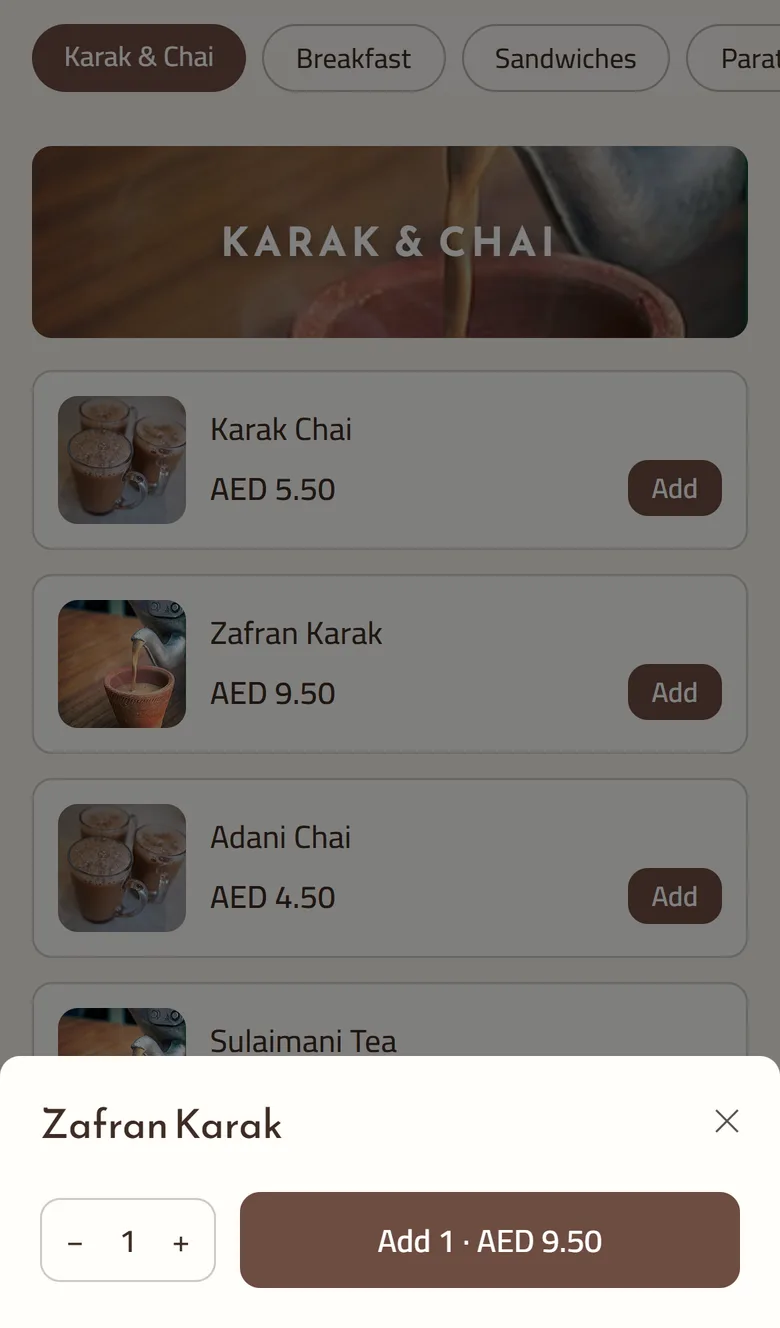
Stock is live. Counts per item fall as orders come in, and you can hold a count on a single option as well, so running out of one sauce does not grey out the whole dish. At zero the item greys itself out on every code in the room at the same moment, with nobody watching the screen.
Then the part a PDF cannot reach. The guest orders from the seat. The table number travels with the order automatically, because the code is the table, so there is nothing to type and nobody to flag down. Every line is re-priced from your live menu at checkout, so the price shown is the price charged, and a double tap cannot create two orders.
The kitchen finds out in seconds. Get Menu sends 3 messages for a normal order through the WhatsApp Business Platform that Meta documents publicly: a confirmation to the guest, a ticket to the managers' group, and a dispatch message to the riders' group when the order is going out on a bike. Your team reads them in the same WhatsApp groups they already use all day.
For a table of six, group ordering gathers everyone into one bill. Each guest orders from their own phone into the same order, and the table gets a single total at the end.
A laminated menu is a photograph of a decision you made in March. A QR menu is the decision you are making now. Change a price at four in the afternoon and table six sees the new price at four in the afternoon. Take the salmon off and it disappears from every card in the room. Add a Ramadan section and delete it after Eid, and the cards on the tables never know anything happened.
Setting the menu up is the part owners dread, and it is usually the shortest part. If your menu already lives in a spreadsheet you upload the whole file at once instead of typing items one by one. If it does not, you type it once and drag categories and items into the order you want them read.
"The card pack was the thing owners thanked us for most, and it is not because printing is hard. It is because it had been the tenth item on their list for six months. The designer will not let a low contrast code through, so nobody discovers the problem at the table."
— Tanzeel ur Rehman, co-founder of Get Menu
This is where most QR menu for restaurants projects stop early. The code got the order in. It can also bring the guest back.
Loyalty runs on the same scan. A stamp is added per order automatically, and nobody has to mark anything delivered for it to count. You can stamp per order, per dirham spent, or only on the one dish you want to sell more of. Regulars grow into tiers, and a tier can carry its own automatic discount.
The card itself lives in the phone the guest already carries. The Android card is live today and updates itself, so the stamp count on the card changes without anyone opening an app. There is no app to install at any point. It works on iPhone and Android.
Around that sit the quieter earners. Ten kinds of upsell, from a drink paired with a main to a threshold that unlocks a side. Coupons with caps, exclusions and expiry dates. Bundles, where any three items go for one price. Discounts never stack by accident, because the best single one wins. A secret menu can sit behind an unlock code for regulars who know it exists.
The code on the table and the delivery page are the same menu, which means one place to change a price. Delivery checkout adds what delivery needs: a GPS pin dropped by the guest, a building and unit picked from a list, a delivery fee you set per building, and free delivery over a threshold you choose. The rider gets a link that works without an account.
Payment stays physical. Cash or your card machine, at the table or at the door. There are no online payments in the system, which also means no card details exist anywhere for anyone to steal. Detailed order contents are cleared automatically after 120 days, while your sales figures stay.
One more thing to be clear about. Get Menu now includes a point of sale as a yearly add-on to the plan, so the counter can run from the same menu as the table codes. It rings up walk-in sales, takes cash or your own card machine, splits a bill, opens a cash drawer, prints receipts over wifi and closes each shift with a Z report sent to your managers' WhatsApp group. For the dining room it adds a drawn floor plan, tabs and rounds, a kitchen display screen and waiter phones, and a stamp given at the counter lands on the same loyalty card. It works on iPhone and Android. Restaurants with a counter they like can keep it and run Get Menu beside it.
Day one, load the menu and put photos on the dishes you actually want to sell. Day two, generate the table pack in the designer and send it to the printer, matte finish. Day three, connect WhatsApp by scanning a code, so tickets arrive in the group your managers already read. Day four, place the cards and brief the staff, which takes about 10 minutes. Food and payment are still theirs. Writing orders on a pad is not.
Two settings deserve a look before your first busy service. Set the auto-confirm timer, so an order is acknowledged even when every hand is full. And set a minimum order value if the same menu serves delivery, because a single item sent across town is a loss wearing the clothes of a sale.
The trial runs 15 days with no card details required, which is long enough to put real cards on real tables across two weekends and see what your own guests do.
No. The code opens a normal web page in the phone's own browser. There is nothing to download and nothing to sign up for. The loyalty card goes into the card holder already on the phone, so that needs no app either.
A PDF is a picture of your menu. A QR menu is your menu. The PDF cannot take an order, cannot know which table scanned it, cannot remove a dish that sold out, and cannot change without somebody making a new file and a new code. Same card, very different machine behind it.
No. Payment is cash or your card machine, at the table or on delivery. Nothing is charged through the page, so no card numbers are stored and there is nothing for a guest to hesitate over.
One per table. A shared code loses the table number, and the table number is what lets an order route itself to the kitchen without anybody asking where it came from. The print pack builds the whole set in one go.
The card designer, the print pack and table ordering are all part of the flat monthly subscription, with 0% commission on what you sell. Current plan prices live on the pricing page, and this article quotes none of them on purpose so it cannot go out of date.
Menus in Lebanon go out of date faster than they wear out. A printed code is the cheap half of the answer, and choosing what sits behind it is the half that matters.
Taking orders in a chat window works right up to the Saturday it does not, and the failure is always the same three messages back.